This episode is brought to you by Popup Maker & WP Fusion
Boost Your Website’s Leads & Sales with Popup Maker
Get started for free or save 15% OFF Popup Maker Premium—the most trusted WordPress popup plugin to grow your email list and increase sales conversions.
Automate Your WordPress LMS & CRM with WP Fusion
Connect your website to your CRM, automate your marketing, and personalize your students’ learning journey. Save 15% OFF WP Fusion with coupon code LIFTERLMS.
Most membership sites do not die from lack of effort. They collapse under their own weight. In this solo episode of LMScast, Chris Badgett walks through why most membership sites fail, and the three-part alignment model that keeps the winners standing. This one is for course creators, coaches, and education entrepreneurs running (or about to launch) a membership site on LifterLMS or any WordPress LMS. If you have ever added “one more” benefit to your offer and quietly regretted it, pull up a chair.
The failure pattern is almost always the same. Creators get excited, they hear about group coaching, template libraries, second memberships, surprise upsells, and they bolt all of it onto the site. What started as a clean offer becomes a Rube Goldberg machine that nobody wants to run, least of all the owner.
Chris breaks the fix into three pieces that have to align: the business model, the pricing, and the offer stack. Miss one and the site stops paying rent on your time. Get all three in sync and the membership starts to compound.
He walks through four core subscription-style models worth knowing. Training-based. Resource library. Community-first. And the Netflix-of-learning catalog. Each one has its own rhythm, pricing ceiling, and content obligations. The fastest way to kill a membership is to build one model while secretly trying to run another.
Most membership sites collapse under their own unnecessary complexity.
Chris Badgett
Take Funk Roberts and Over 40 Alpha. Training-based model, weekly live coaching, a clear niche (men over 40), tens of thousands of paying members at $29 to $49 per month. The business model, the price, and the offer stack all reinforce each other. Or Ziv Raviv and Balloon Artist College, a six-figure business in a niche with roughly 3,000 people in the whole addressable market. The alignment carries the day.
Chris also covers three off-pattern models worth a look: one-time lifetime deals (great for early-adopter funding), cohort memberships (group moves together through a defined stretch), and continuing education or professional association memberships. CE memberships are quietly one of the most durable and profitable categories on WordPress right now, especially in regulated fields like healthcare, legal, and the trades. The LifterLMS Continuing Education add-on handles compliance tracking end to end.
On pricing, Chris leans on a story from SaaS pricing legend Patrick Campbell, who famously tells audiences, “Let me guess. You just guessed.” Most creators do. The fix is good, better, best tiers (three, maybe four, no more), annual over monthly when the price allows, and a real free or $1 trial at the front door to filter serious buyers from tire-kickers.
The offer stack is what sits inside the box once somebody joins. Courses are the anchor. Templates, live events, coaching, community, members-only newsletters, all of it can compound value, but also compound your workload. Add it only if you can keep the promise.
Chris closes with a three-question gut check. Does your model fit your niche? Does your pricing match your member’s willingness to pay? Does your offer stack support retention without burning you out? If the answer to any one is no, that is exactly where the collapse is starting.
Here’s What You’ll Learn
- Why complexity, not demand, is what usually kills a membership site
- The four main subscription membership models (training, resource library, community-first, Netflix-of-learning)
- Three alternative models worth considering (lifetime deals, cohorts, continuing education)
- How to price using good, better, best tiers, plus how to think about annual versus monthly
- How LifterLMS access plans map to any membership model you can imagine
Key Takeaways
- Align three things before adding anything else: business model, pricing, offer stack
- Cap pricing plans at three (four max). More tiers confuse. Fewer leave revenue on the table
- Default to annual pricing with a 20% discount when your price point allows
- Offer a free or $1 trial to lift conversion and filter serious buyers
- Play inside the LifterLMS access plan UI until the settings feel native. The tech is already there. The work is the business thinking
- Use the three-question gut check: does the model fit the niche, does the pricing match the value, does the offer stack support retention without burning you out
Resources Mentioned
- LifterLMS Academy (home for the free and paid training memberships)
- Course Pricing Focuser (free course on the LifterLMS Academy)
- The Perfect Offer Playbook (premium training on the LifterLMS Academy)
- LifterLMS Continuing Education add-on
- LifterLMS Social Learning
- Document Library Pro by Barn2
- BuddyBoss
- Funk Roberts on Over 40 Alpha (LMScast episode)
- Tim McIvor’s CPD platform for school psychologists (LifterLMS case study)
- Ziv Raviv on niche membership sites (LMScast episode)
- Ziv Raviv on $377K in 5 years (LMScast episode)
- Alex Standiford on Siren Affiliates + Netflix-of-learning (LMScast episode)
- Siren Affiliates
- Dan Martell’s SaaS Academy
- Patrick Campbell on ProfitWell (sold to Paddle)
About the Host
Chris Badgett is the co-founder and CEO of LifterLMS, the most powerful learning management system for WordPress. Chris hosts LMScast, the #1 podcast for course creators, membership site owners, and education entrepreneurs. Together, we build the future of online education.
2025 WordPress LMS Buyer’s Guide
Exclusive Download! Stop wasting time and money researching online course and membership site tech.
Here’s Where To Go Next…
Get the Course Creator Starter Kit to help you (or your client) create, launch, and scale a high-value online learning website.
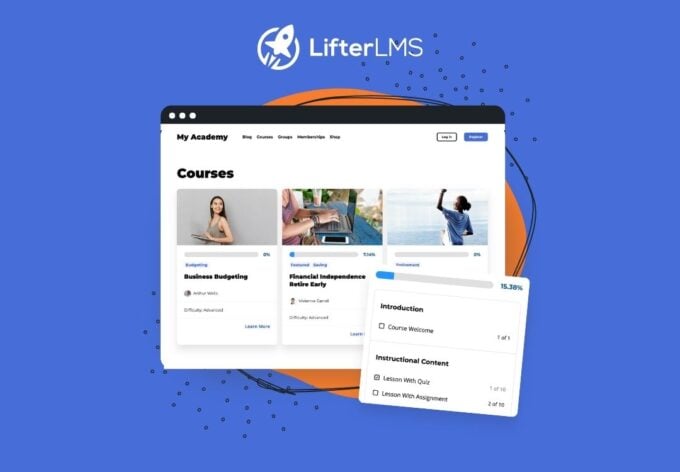
Also visit the creators of the LMScast podcast over at LifterLMS, the world’s leading most customizable learning management system software for WordPress. Create courses, coaching programs, online schools, and more with LifterLMS.
Browse more recent episodes of the LMScast podcast here or explore the entire back catalog since 2014.
And be sure to subscribe to get new podcast episodes delivered to your inbox every week.
Episode Transcript
Chris Badgett: You’ve come to the right place if you’re looking to create, launch, and scale a high value online training program. I’m your guide, Chris Badgett. I’m the co-founder of LifterLMS, the most powerful learning management system for WordPress. Stay tuned, I’ve got something special for you. Enjoy the show.
Hello, and welcome back to another episode of LMScast. I’m Chris Badgett, and in this solo episode we’re going to look at why most membership sites fail, and a model that you can use today so that your membership site does not fail and has the highest likelihood of success. Most membership sites collapse under their own unnecessary complexity and lack of key missing pieces that we’re going to talk about in this episode. The winners keep three things aligned. The first thing is the business model, the pricing, and then the offer stack.
Just to jump in, why membership sites collapse is like why WordPress websites collapse. When you’re new to WordPress, you get really excited about all these different plugins, and you start installing all these things, and you hear about this tool so you add it to your site. You just overcomplicate and build a Rube Goldberg machine of a website.
The same thing happens with membership business models. Part of the reason this happens is because education entrepreneurs and coaches and course creators, they get really excited, and for good reason, and they hear about a new idea like, oh, I should host office hours, so I’m going to add office hours to my membership site. Oh, I should add a template library. I’m going to add that to my membership site. I’m going to do one-on-one coaching, group coaching. I’m going to do this upsell. I’m going to do this continuity offer. I’m going to create a second membership about X. I’m going to put part of this course in the membership, and then the rest of the course in another membership. You see where I’m going. Things start to get overly complicated without a structural foundation.
I do want to highlight, we do have a training course on the LifterLMS Academy called the Perfect Offer Playbook, which gets into the offer aspect and building up your offer stack. It’s a really in-depth training, so go check that out.
As we discuss this, I want to define some terms for you because it’s easy to get a little confused. We have the LMS, the learning management system like LifterLMS. We have courses, so you could have big courses or mini courses, which are basically structured content of lessons that provide structured data that a student can learn from through videos, content, quizzes, assignments, whatever.
Then you have the concept of a membership. The way I’m using a membership is to define what content is protected. Perhaps you want to put multiple courses inside of a membership, so you’re creating a course bundle. You can also use a membership to protect and sell access to other parts of your website, outside of courses, like a template library, premium blog content, a calendar with events on it, and so on.
Then there’s the concept of the subscription. That is a recurring payment usually at a fixed amount, a recurring payment mechanism. In the world of LifterLMS, we have a concept called access plans. What an access plan allows you to do is you can put one or multiple access plans on a course and/or a membership that defines the pricing and the access rules around accessing that course or that membership.
It’s important to get clear on the difference between a course, a membership, a subscription, and an access plan. The LifterLMS access plan is the most flexible system that I’ve seen on the internet for pricing. You can do any pricing model and access model you could possibly think of, from one time payments, to free trials, to lifetime access, to payment plans, to group access plans. What else could we do here? We could do yearly, we could do monthly, we could do daily. There’s all kinds of start dates, end dates, enrollment periods. All this is possible with LifterLMS and the access plan system.
The main thing so that your membership site does not fail is to align three things: the business model, the pricing, and the offer stack. If you miss one of those, or overcomplicate one of those, your membership site is just going to collapse under its own weight. Let’s plant ourselves on the membership site business models first.
I’m going to go over four subscription style membership models and start there. The first one is one of my favorites, which is what I call the training membership, or a training based membership site. This is where you usually have a catalog of courses, or potentially one big signature program type course.
Example. LifterLMS user, and we did a podcast with him. Funk Roberts has a training membership called the Over 40 Alpha Brotherhood, which has 10,000 paying members at $29 to $49 a month with weekly live coaching calls. You can check out the case study we have on Funk on our membership site.
A training membership, or a training based membership site, will have courses, but then often other benefits like access to group coaching, whether that’s live or virtual, and so on. We’ve got some exciting stuff in LifterLMS 10.0 for group coaching events, virtual and in person, and how you can integrate events into your LMS. But that is a conversation for another day.
The next membership site business model I’d like to explain is what I call the resource library membership. This is courses plus a searchable library of downloadable templates, swipe files, and tools. For example, LifterLMS has its own media protection mechanism that solved one of the biggest content privacy issues in WordPress, which is that when you upload a file to your WordPress media library, it’s public. It’s not actually private. Anyways, LifterLMS users can actually protect files that they upload to their WordPress media library and include them in their courses and memberships. That could include downloadable templates, PDF documents, audio files, video files, whatever.
There’s also a really sweet implementation you can do with a third party plugin by Barn2 called Document Library Pro. If you’re going for a very resource rich template library that has a ton of files in it, you need a lot of organization and filterable, searchable document libraries. Check out Document Library Pro, which works great with LifterLMS. We also have a blog post on our site, as well as on the Document Library Pro or Barn2 website, about how to use LifterLMS and Document Library Pro together. Essentially the second membership site business model is the resource library. You may not be leading with the courses, but you have some, but you also have this rich collection of files that helps the ideal learner in your membership.
The third business model of subscription style membership is the community first membership. This is where courses plus community is the primary product. You could have forums, live events in person or virtual. You could have peer accountability. You could have mini mastermind groups. Essentially the content supports the tribe, not the other way around.
In this age of artificial intelligence and isolation, and people going more and more to the internet to connect with other people, community-based membership sites are very important. When you throw in the education component, so we have courses inside of our community, community can become a very sticky type of membership when they’re well designed around a specific customer avatar or learner profile. That is the community first membership. I should also mention LifterLMS has a social learning add-on, so you can quickly turn your WordPress LMS website into a social online community site. It’s sort of like having your own kind of private Facebook group, but on your website that you own and control. So that’s the community first membership.
The fourth subscription style membership business model is what I call a Netflix of learning. If you think about Netflix, it’s like a collection of movies and shows, and you pay a subscription every month for access to the catalog of content. One subscription unlocks the whole library. A Netflix of learning is an awesome opportunity. Those are great for broad audiences with lots of niche interests.
In my early days of building membership sites, I worked with some photography focused membership sites where they had courses and lots of niche topics within photography, from wedding to product shots, to portraits, to architecture, and so on. It was like a Netflix of learning for photographers. This is a really cool membership site if you are prolific, and/or you’re also leading a community and getting a bunch of creators together to all contribute to the Netflix of learning.
We also did a podcast here on LMScast with Alex from Siren Affiliates, where we go over how to exactly build a Netflix of learning with Siren Affiliates, WordPress, and LifterLMS. There’s also a dedicated YouTube video that shows click by click how to build a Netflix of learning or Udemy clone type site on our YouTube channel. Go subscribe to the LifterLMS YouTube channel if you have not done that yet.
I’d like to give you three other popular alternative membership site models. The other three models change the pace or the cadence. One of these is called the one-time or lifetime payment memberships. This is something like a course plus lifetime access paid once. It’s basically evergreen content with no ongoing deliverables. You could think of it like an AppSumo style, lifetime deal pricing. Zero churn risk, one shot at the revenue.
Sometimes when you’re first launching your membership, you might want to do an early adopter or founding member offer like this, where you plan on doing one of the subscription or recurring revenue based memberships later. For those people that take the plunge into your membership early, join you in the early days, they might get a lifetime membership for one time cost, and they get rewarded by not having a recurring payment. It also helps you fund the early days of your membership site, and also to test and validate your membership site idea.
The other thing you can do is cohort based memberships. LifterLMS, as an example, has a concept called course cohorts, where you can have different cohorts that use the same course over and over again, but for different groups of people moving through at a different time. You can also do this at the membership level, where you have cohorts of people that belong to say the 2026 spring membership, which has its own course catalog, community, and other features. Cohort based memberships are really about a group of people joining at the same time, at a similar stage, and then moving through the training in the membership or in all the content and resources together, which can be very powerful.
I joined a great program by Dan Martell called SaaS Academy. That was a membership I was in for two years. It was not cohort based. I came in and there were a couple new people around when I came in, and then every week or month there were always new people joining, and so on. It was still great, but it wasn’t cohort based, and it actually worked really well. I liked the way he had it. For some membership sites, it might make sense to really lock in, move people through together, particularly if you’re doing a lot of instructor led training in person or virtually, and you’re working through a process, so everybody is on the same page as they work through the membership.
The other type of membership site, which we’re seeing more and more of in LifterLMS, is the continuing education or professional association membership site. This is where you have things like courses for continuing education units, or CEUs. LifterLMS has a dedicated add-on called LifterLMS Continuing Education that has everything you need to build a compliance tracking and continuing education business from your WordPress site.
It’s very popular to see these kind of membership sites in regulated professions like healthcare, legal, and the trades. There’s often a recurring need to stay certified, recertify, or get new credit hours every year. We’ve done a couple interviews on LMScast, like with Tim McIvor, who does continuing education for school psychologists. There was another one we did a while back on pharmaceutical continuing education. Continuing education is a major profit center for memberships, particularly around industries that have an ongoing need for recurring continuing education. These membership sites can be very profitable, successful, and sticky.
Alright, so we talked about the membership model. You just have to get really clear on what it is you’re building, what is the business model, and you need to challenge your assumptions. Sometimes just get started. You don’t have to figure all this out perfectly, but it’s important to keep revisiting and ask yourself, do I have the right membership business model for my membership site that’s in alignment with what my market wants, the pricing, and what it is that I actually offer?
Let’s talk about the offer stack. The courses are the fundamental piece of the offer. They’re the anchor. If you’re using LifterLMS and LifterLMS’s membership functionality, the offer stack is the courses plus everything else you layer on top. It could just be more courses. You’ve got that, start there. You can do course bundles where you do all the courses, the Netflix style, or you could do groups of courses and course bundles. The offer stack can continue to grow. By offer stack, I mean once somebody purchases your membership and now they’re an enrolled active user on your learning management system website, what do they get? What’s inside the box?
We talked about courses. What else could they get? They could get templates, they could get swipe files, they could get downloadable assets, they could get other files. Or even I see people doing things like custom GPTs, or certain spreadsheets, or Canva files, or other kind of newsletters that are for members only. These are fast to consume, high perceived value, easy to add monthly.
It’s really important if you’re charging a recurring monthly fee to add recurring value, which means you’ve got to keep those things up to date. You’ve got to keep adding new templates, downloadable assets, resources. If you do a members only newsletter, you’ve got to keep that rolling monthly. You want to be sure not to over commit so that your offer stack is sustainable for you as a creator.
The other thing that can add an incredible amount of value to your membership is live events. LifterLMS has an events add-on. When you’re watching this, it may have come out, or it is about to come out as of this recording. We were just testing, it’s in the final stages of testing for a launch. That basically allows you to do virtual and in person events from your membership site, whether they’re location based or virtual. We’ve got direct Zoom integration and so on.
It’s in the offer stack that we can add things like group coaching calls, or one-on-one private coaching calls, or an in-person event, like on location somewhere in the world. It could be a hybrid model where we do both. These synchronous, or asynchronous but replayable, events like webinars, recorded workshops, guest trainer sessions, all these can get added into the offer stack in addition to courses.
Just a pro tip for you. If you ever do guest instructor stuff, some people use LifterLMS, they use a structure of a course, they use each lesson to house a specific webinar or workshop. That way you can use the existing course structure in a slightly non-traditional way to put all the webinars in one place, or put all the guest workshops in one place, and so on. Just an idea for you.
The other thing is the community part of the offer stack. You could do that with the LifterLMS Social Learning add-on. You could do that with tools like BuddyBoss, or a forum, Slack community, Discord, Circle. There’s so many different ways to do online community. You can even do in-person community if your target market is in the same geography.
I just want to reiterate in the offer stack, some kind of coaching or one-on-one access can be very powerful. This could be one-on-one private coaching monthly or even weekly. It could be group based. It could be a private forum that the site owner is active in. It could be like a red phone where you can call the coach in an emergency. It could be email access, it could be text message access, or something like a Telegram community for support. When you give one-on-one level support, this really needs to be priced appropriately or in the premium tier. That’s a very important part of your support mechanism, which by the way, we talk about in the Perfect Offer Playbook training course, which is on the LifterLMS Academy. Go check that out.
The subscription economy is estimated to hit 330 billion in 2026, growing at roughly 12% annually. This stack matters because there is a lot of demand for subscriptions in the world. A lot of us think, oh man, I don’t want another subscription that I’ve got to sign up for. But if you do your offer stack correctly with your membership site, you can take a piece of that $330 billion subscription economy. That statistic is from InternetRetailing.net.
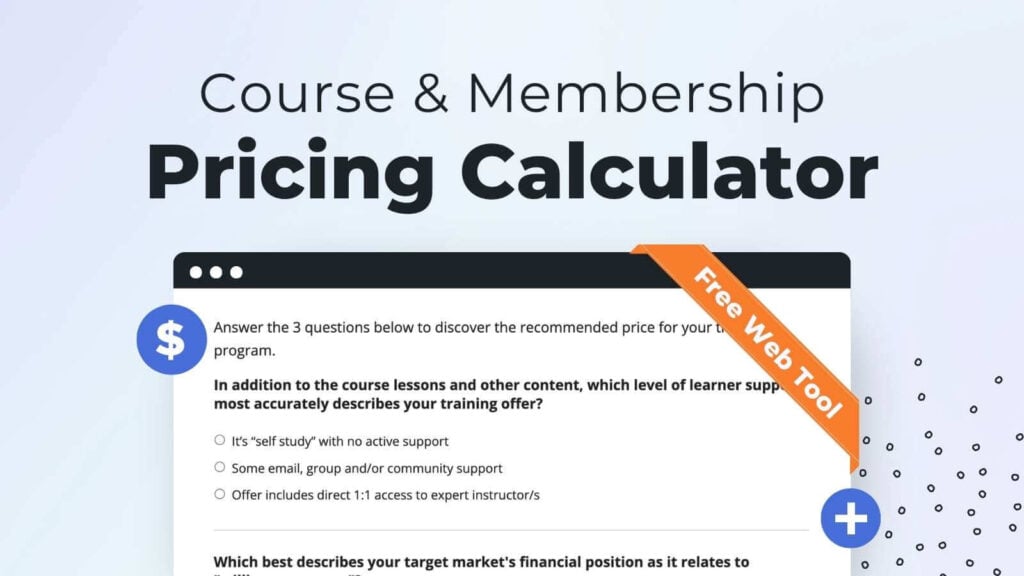
The next thing I want to talk about is pricing. Now that we’ve figured out our business model, we’ve figured out our offer stack, how much do we charge for that? Let’s talk about the pricing. Before I dive in, I want you to know that we do dive deep in a free training on the LifterLMS Academy, a free course called the Course Pricing Focuser, which is going to go super deep on pricing. I would encourage you to look at that. I’m going to remind you at the end on how to get access to that and a lot of other things through a free membership. So stay tuned.
The price is really where most membership site owners guess. The winners of the membership site game don’t guess. They match the price to the model. I remember being at one of Dan Martell’s in person SaaS Academy events, and there was a pricing expert and a subscription economy expert there. His name’s Patrick Campbell. He sold his Price Intelligently software to a company called Paddle, I believe, for $200 million. This guy is one of the top pricing experts in the world.
I was basically learning from him about software pricing. One of the funniest things he says when he does a talk on stage is he asks the audience how they chose the price for their offer. Then he says, wait, let me guess. He holds up a finger in the air, like he’s just going to lick his finger and he’s just going to guess. What he says is, let me guess, you just guessed. That’s exactly true. Most people don’t put a lot of effort into pricing, or they just do a quick look at competitors and fall somewhere in the range. But there’s a whole science and art to pricing.
Again, the Course Pricing Focuser course goes into a lot of detail, and I highly recommend that as a takeaway so that you can nail your price. But the first thing is recurring versus one-time pricing. Recurring is obviously better because it compounds over time. One time is great, but you limit your revenue. It’s just per user. You’re constantly needing to get new users. Basically you have to get really clear and honest with yourself about the recurring value that you’re going to do if you want to do recurring. You need to make sure that you can sustain the promise that you’re making for recurring value over the long term.
One of my favorite pricing tricks I learned from a pricing expert named Marcos is the three tier pricing approach. He calls it good, better, best. It’s like bronze, silver, gold type pricing. According to MembershipSolutions.com, good, better, best pricing generates roughly 60% more revenue per cohort than single plan pricing. It’s really important once you start building pricing plans to not overdo it. I recommend not doing more than three. You can probably get away with four. But any more than that and you’re just confusing people and overcomplicating your offer.
Really, the reason a good, better, best pricing plan makes more revenue is because you’re able to capture more of the market. You want the middle plan, the better plan, to be the one that most people buy. The cool thing about having one lower than that is that if the middle plan is too expensive but you can still add value in a lower plan, you get somebody else in the door. Then there’ll be people in your market who are not price sensitive, who want everything. Let’s say you offer the private coaching in the top plan. It costs five times more than the middle plan, or even more. You can charge a lot more for that.
There’s always a segment of your market that is where your primary offer is just out of reach, while at the same time there’s people in your market who could afford to pay way more and get more value. That’s why good, better, best pricing works. There’s other reasons it works, but those are the main reasons.
Then there’s the decision of annual versus monthly. If you can go annual, I recommend that, because annual subscribers are roughly 40% less likely to cancel than monthly subscribers and carry significantly higher lifetime value. That data was found on the MembershipSolutions.com website. Monthly is cool because what it allows you to do is, if the annual price is really expensive, it’s much easier to charge, let’s say, a thousand dollars a month than $10,000 a year in general. In that case, if I was at that price point, I would probably consider monthly.
If you’re in a lower price point offering, annual only is a great idea. Let’s say your membership is only $50 a month, and let’s say you do it annually for $499 a year. That’s still within reach. What you can also do is put a toggle on your website and give people the option to do either, where they could do annual or monthly, then leave it up to them to decide.
The other thing, when you do an annual and monthly offer, just a pro tip for you out there, the annual plan in general is recommended that it’s discounted by 20%. When I say a thousand dollars a month or $10,000 a year, what I’m saying is it’s not $12,000 a year. I’m giving you two months free. That’s another way to think about that 20% discount if you’re trying to nail your pricing. If you give them monthly and annual, on the annual option you can just multiply your monthly price by 10 and not 12, which gives you a good spot where if they commit to annual they’re getting two months for free, which incentivizes people to go for the annual to save money if they’re going to be in this for the long term.
I’m a big fan of trials for membership sites. There’s a couple types of trials. There’s free trials, there’s cheap trials, and then there’s expensive trials. What do I mean by that? A free trial is fantastic because you’re literally saying, hey, I’ll give you a day for free, two weeks for free, a month for free. I believe so much in my product that I’ll let you in the door, and then after that trial period is over, your credit card or PayPal account will start getting charged. And by the way, you can cancel if you don’t like what’s going on.
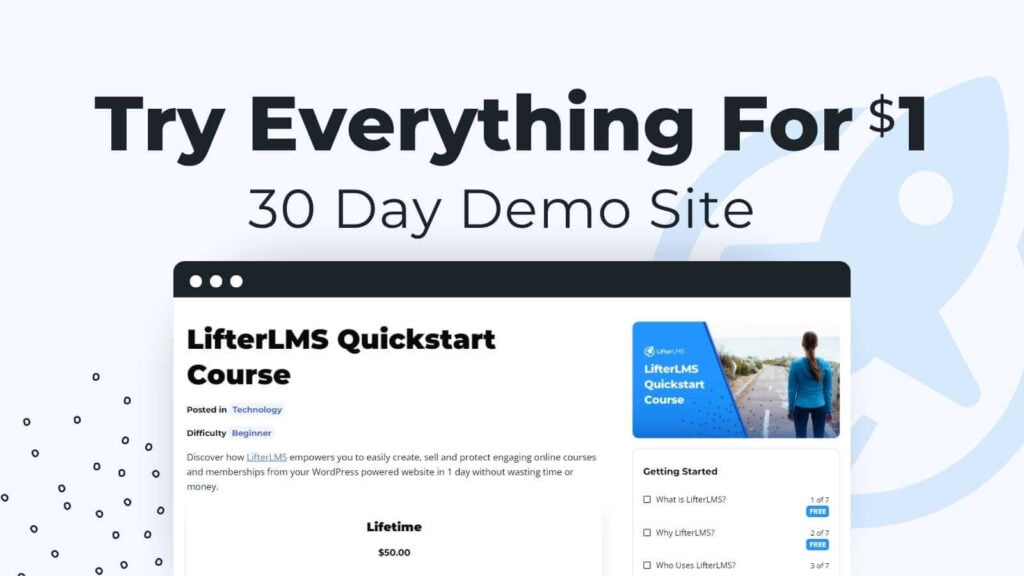
I’m a huge fan of free trials. I think they’re great. I also like paid trials, a little bit of skin in the game. I’m a big fan of the $1 trial. Just getting somebody to pay even a nominal amount of money is really helpful as a filter for serious buyers and to lift the conversion and eliminate some kind of lower quality folks that don’t really have any intention. They just wanted to see what was in here for free, but they’re not that serious. By having a $1 trial, it really filters out and you get some really great leads in your platform.
If you want to do more sales by having that dollar there, that paywall, it reduces the amount of people that you can reach out to if you’re trying to promote your main offer, or do some live connecting with them to see if they’re a fit, answer their questions, and make sure they stick around and decide to stay. So it’s trials. LifterLMS has trials built in. It’s optional. You can turn it on in your membership access plans.
Then the expensive trial is where the first payment is actually much bigger than the ongoing payment. This is what’s also known as a continuity offer. The trial period might be a thousand dollars the first month, and then cheap, like $30 a month ongoing after that. That’s a different style of trial or continuity offer where most of the value comes in the first month, but then there’s still ongoing value but a lesser amount until they cancel.
In terms of churn, when you’re pricing, nobody is going to stay with you absolutely forever. There might be a few, but it’s important to figure out what’s an acceptable churn rate for you. I’m a fan of recurring cancel anytime forever access plans, but I also like to hold in my mind that I want to get my person in my membership successful and have the transformation, solve their problem, help them discover the opportunity in a set period of time, ideally.
As an example, when I joined the SaaS Academy membership, I looked at it as my version of graduate school. I did not go to graduate school or university, but that’s typically in the United States a two year program. I was like, you know what, I’ll try this thing, and if it’s good I’ll renew for a second year. They did annual, by the way, and it was good. I stayed for a second year. At the end of the second year, I decided to move on, and I was super grateful for my time and I learned a lot. My business grew by 2.6 times. It was awesome. But it had a shelf life of about two years for me.
Some people stayed in there for one year. Some people, there’s people in there that have been in there probably for seven years or eight years, however long it’s been going, and there’s a couple different tiers in there. My whole point is to think about healthy churn. Churn, if you’re not used to the terminology, is what percentage of your people cancel every month or every year. It really depends on the industry.
Usually if you’re going after the higher end of the market, more enterprise or more professional into the market with whatever your membership site content topic is about, you’re going to have a lower churn than something that has more of a market that’s more price sensitive and maybe more hobby based, less serious or professional. That’s okay. Figure out your churn rate. If you could do 3% or 5% monthly churn, that’s pretty healthy. That’s a good target.
The goal, if you really want to get into the math of it all, is where you have net negative churn, which is where your existing members are referring so much that even with the natural churn rate that is there, more people keep coming in the site. It just explodes exponentially. Or maybe if you’re using something like LifterLMS Groups, people keep adding more team members. It’s known as net negative churn, where you’re just doing amazing.
The final piece of pricing math that we’re going to talk about today is the lifetime value, or LTV, to cost to acquire a customer, or CAC, ratio. Basically what that means is that if we do a three to one ratio of lifetime value to CAC, that’s good. What that means is if it costs me a thousand dollars to acquire a customer, that’s my CAC, my cost to acquire a customer. Let’s say the average lifetime value, or LTV, of one of my members is $3,000. That’s great. That means that for every $1,000 you spend to acquire a member, you get $3,000, which is basically the average of retention and churn and all that baked in.
You’ve got to find your healthy customer acquisition method, whether that’s paid or organic, and also get super clear on your churn and your lifetime value of your average member. All that comes together to create a training based membership site that is aligned.
I wanted to give a specific example of a membership site where this alignment was really done well with the offer stack, the business model, and the pricing. He’s been on the show several times now. His name is Ziv Raviv, and he’s an expert at building niche membership sites. He’s a really interesting guy. He’s in a lot of different niches. I like one of his early projects, which was Balloon Artist College, which is a membership site that helps child entertainers or balloon artists start and grow their businesses.
This is a really unique niche. There was only like 3,000 balloon artists in the world, or in the addressable market that Ziv was going after. I find incredible that he made $277,000 a year when I interviewed him, and this was a while ago, about his membership site. The business model works here because it’s in a tiny niche, and the pricing was good. It wasn’t super expensive. The balloon artist has a lower willingness or ability to pay. His offer stack really matched up with what the community needed. So he had courses, community, tactical resources. Nothing extra, nothing missing. Ziv is one of my favorite education entrepreneurs. I look up to him and see him as a shining example of lifting up others through education, our company mission. If you want to learn more about Ziv, I would encourage you to go listen to all the episodes we’ve done with Ziv Raviv. I think there’s been three of them.
I want to just go over a little bit of the technical pieces of how to think about putting all this together. This is the part that most people skip, which is that the technical mechanism for setting up your membership site is already in your learning management system. The LifterLMS access plans, you’ve got to get Zen with them. Play around with them. Try to come up with your good, better, best strategy. Play around with just the settings, so you can see, oh, I could do the sale pricing, I could do a trial, I could do a free thing, I could do sell to groups. It’s just going to stir your imagination.
You’ll see the payment flexibility options, like one time, daily, weekly, monthly, yearly, or until cancellation. Duration can run indefinitely, or you can, if you have an eight week program and that’s it, you can do that. Look at the visibility options. Plans can be public, featured, or hidden. If you need to create a secret backdoor plan to your membership to let somebody in who’s doing some testing for you, or as a benefit to an industry partner, you can create these kind of secret backdoors or hidden access plans.
The main point is that every one of the models we covered here maps to a specific access plan configuration in LifterLMS. The tech is already there. The work is the business thinking, not the setup. Get your offer stack together, choose a price, choose a business model, and then come up with pricing and keep working on it. This is one of those things where for your membership site to succeed and not to fail, you’ve got to test all your assumptions and keep tweaking and fine tuning. Sometimes a little change can dramatically impact something.
For example, if you have a more expensive membership, let’s say it is a thousand dollars a month, and maybe you’ve got a couple people in there and it’s going all right and they love it, but you’re just not closing sales. Potentially introducing a one week free trial or dollar trial could literally be game changing. Just by removing that friction and letting people basically try before they buy or commit to the ongoing payment.
Here’s the whole alignment right here. It’s just answering three questions. Does your model fit your niche? That’s question one. Does the pricing match your value, your member’s willingness to pay? And does your offer stack support retention without burning you out? If the answer is no, this is where the collapse is happening, or something is missing that you really need to fill in.
I would also encourage you to keep simplicity in mind. It’s really easy with a membership site to try to add in too many bells and whistles, benefits, different options, pricing tier complexity. Keep it super simple. You can test things. If you add a benefit that nobody really uses, take it away. Or if you’re unsure if a benefit’s going to work, add it, see what happens. If it works, great, keep it.
I wanted to encourage you to check out a real membership using LifterLMS. If you go to the LifterLMS Academy, that’s at academy.lifterlms.com, I’ve got two memberships for you. One is free and the other is paid. No matter what, definitely get the free one, which includes our Course Pricing Focuser course, as well as a bunch of other free trainings to help you. If you want to go big and get all our free stuff and all the premium training on the LifterLMS Academy, sign up for that one. Just go to academy.lifterlms.com, click on memberships at the top, and you’ll see that.
The LifterLMS Academy has a bunch of courses that you can get into individually if you want. Some are free, some are paid. We have two memberships that basically give you access to some or all of the courses. Go check that out.
Just keep in mind, your LMS is a membership site. Align the three pieces and let the complexity collapse into something you can actually run and manage for your membership. Last time, those three pieces are your membership site business model, your pricing, and then your offer stack, what’s included in your membership. I’m Chris from LMScast. I want to encourage you to keep building your membership site. Keep going. Keep taking action, and we’ll see you in the next episode. Take care.
And that’s a wrap for this episode of LMScast. Did you enjoy that episode? Tell your friends and be sure to subscribe so you don’t miss the next episode. I’ve got a gift for you over at lifterlms.com/gift. Go to lifterlms.com/gift. Keep learning, keep taking action, and I’ll see you in the next episode.
2025 WordPress LMS Buyer’s Guide
Exclusive Download! Stop wasting time and money researching online course and membership site tech.